Voice Disorders Therapy
- Home
- Voice Disorders Therapy
Voice Disorders Therapy in Lahore
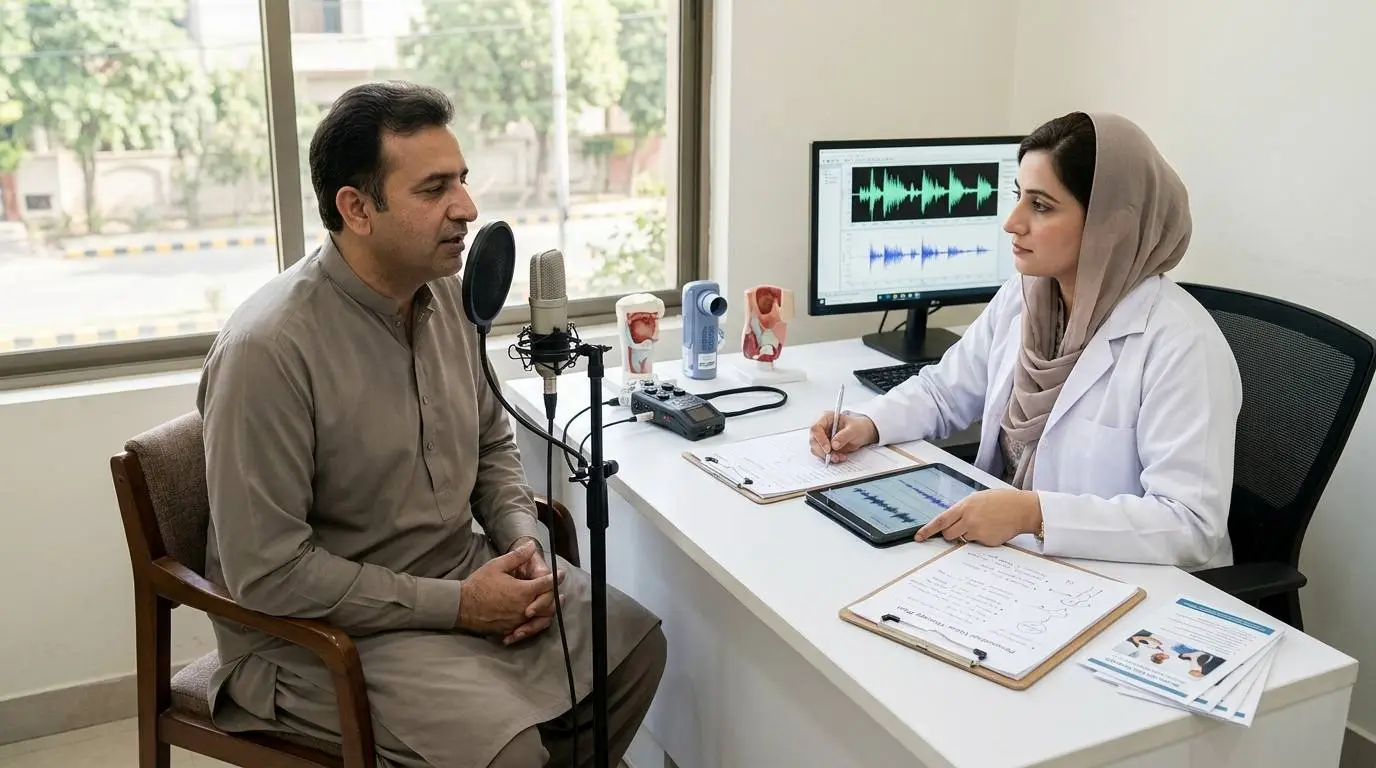
A voice that keeps cracking, fading, or hurting isn’t something to push through. Many people search for voice disorders therapy in Lahore only to find generic exercises with no real diagnosis behind them. Clear Your Voice starts differently, with a proper voice assessment, then a plan built for your specific disorder, not a one-size-fits-all routine.
What Is a Voice Disorder?
A voice disorder happens when your voice sounds or feels different from how it normally should, hoarse, strained, breathy, too soft, or completely gone. So what is a voice disorder, exactly? It’s any condition that affects the pitch, volume, or quality of your voice, caused by how your vocal cords vibrate when air passes over them.
Voice disorders can be short-term, like laryngitis after a cold, or long-term, requiring structured therapy to correct how the voice is used day to day.
Activities Gallery :



Types of Voice Disorders
Speech-language pathologists group voice disorders into four main categories. Understanding the types of voice disorders helps identify the right treatment path.
- Organic: Caused by physical changes in the vocal cords or larynx, such as nodules, polyps, or swelling.
- Neurological: Linked to conditions affecting nerve signals to the voice box, such as vocal cord paralysis or spasmodic dysphonia.
- Functional: The vocal cords look normal, but the voice is misused or strained through habit.
- Psychogenic: Rare cases where the voice problem stems from an unresolved emotional or psychological cause.
Most clients we see fall into the organic or functional categories, often from vocal overuse rather than illness.
Causes of Voice Disorders
The causes of voice disorders vary by type, but a few patterns show up often in our clinic:
- Vocal Overuse or Misuse: Shouting, speaking over noise, or talking for long hours without rest.
- Acid Reflux: Stomach acid irritating the throat and vocal cords.
- Growths on the Vocal Cords: Nodules, polyps, or cysts from repeated strain.
- Neurological Conditions: Affecting the nerves that control the voice box.
- Respiratory Infections: Laryngitis from colds or allergies.
Identifying the exact cause during assessment is what makes therapy effective, rather than guessing at generic exercises.
Our Voice Disorder Therapy Services
Therapy includes vocal hygiene training, breathing exercises, pitch and resonance work, and habit correction for functional voice disorders. Sessions are built around your specific cause, not a fixed template.
Voice disorders often overlap with other communication difficulties. If clarity or articulation is also a concern, our Speech Disorders Therapy service addresses that alongside voice work.
Some clients experience both vocal strain and disrupted speech flow. In those cases, our Stammering Therapy program runs in parallel to build fluency and vocal control together.
How Our Voice Therapy Process Works
- Assessment: A detailed voice evaluation to identify the disorder type and cause.
- Custom Plan: A therapy roadmap built around your voice use and daily demands.
- Therapy Sessions: Structured practice using evidence-based vocal techniques.
- Home Practice: Simple daily routines that reinforce progress between sessions.
- Progress Review: Ongoing monitoring to confirm the plan is working.
Who Benefits Most
- Teachers and lecturers who speak for hours without breaks.
- Call-center agents managing long shifts of continuous talking.
- Religious reciters and public speakers who rely on vocal projection.
- Adults recovering from vocal strain, illness, or age-related changes, particularly those also managing Hearing Impairment Support needs, since reduced auditory feedback can affect vocal control.
Related Questions
What is a voice disorder?
Any condition that changes your voice's pitch, volume, or quality from temporary hoarseness to long-term vocal strain.
What causes most voice disorders in adults?
Vocal overuse, acid reflux, growths on the vocal cords, and functional strain from daily speaking habits.
Do I need a doctor's referral before starting therapy?
Ready to start? Contact Clear Your Voice today to book your voice disorders therapy in Lahore session and take the first step toward a clearer, stronger voice.
What are the main types of voice disorders?
Organic, neurological, functional, and psychogenic each with a different underlying cause and treatment approach.
Are functional voice disorders permanent?
No. Since the vocal cords aren't physically damaged, functional voice disorders usually improve well with targeted therapy.
Ready to start? Contact Clear Your Voice today to book your voice disorders therapy in Lahore session and take the first step toward a clearer, stronger voice.